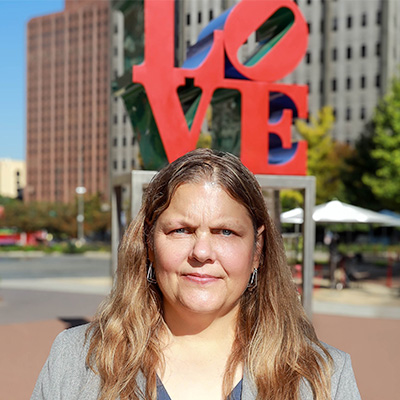

Palak Raval-Nelson, Ph.D., M.P.H., is Health Commissioner for the Department of Public Health. Dr. Raval-Nelson has worked for the department since 1996 when she began her career as a public health sanitarian. Prior to her appointment as Health Commissioner in 2024, she served as Deputy Health Commissioner. This followed her tenure as a supervisor, manager, administrator, and director of Environmental Health Services.
Dr. Raval-Nelson also serves as adjunct faculty at Drexel University’s School of Public Health and Temple University. She teaches environmental and occupational health, as well as vulnerable populations and the environment. She has presented many papers at NEHA, PPHA, and APHA, and has had several publications in the National Journal of Environmental Health. In 2008, she published her first book, Breast Cancer Politics: An Evaluation of the Current Funding Policies. She has graduated from the Centers for Disease Control and Prevention’s Environmental Public Health Leadership Institute.
Dr. Raval-Nelson has her B.S. in Biology from Temple University, her M.P.H. from MCP Hahnemann University (graduating with the distinguished Hiega Society Award), and her Ph.D. in environmental health and policy from Drexel University. She is a member of the Delta Omega National Public Health Honor Society. She was recognized in 2006 by the Society of Women Environmental Professionals as an outstanding woman environmental professional for the Delaware Valley.
Dr. Raval-Nelson is deeply committed to working with vulnerable populations and being a voice for marginalized communities to ensure equity and environmental justice. She has been a civil servant for 28 years and believes in helping people.

Sara Enes, M.B.A., M.S.W., is Chief of Staff and a Deputy Health Commissioner at the Philadelphia Department of Public Health. She has been in this role since 2023. As Chief of Staff and Deputy Health Commissioner, Ms. Enes leads innovative and critical Health Department initiatives and functions, including the construction of two new community health centers; representing the Health Department to City Council, Better Services PHL, and Philly Stat 360; spearheading the department’s continuity of operations planning; providing direct supervision of three operational and four administrative divisions; as well as overseeing the day-to-day operations of the Health Commissioner’s Office, including contract maintenance, union grievance, and right to know requests.
Prior to that role, Ms. Enes was the acting director of the Health Department’s Division of Disease Control, overseeing infectious disease control activities for COVID-19, measles and other acute communicable diseases, sexually transmitted diseases, and tuberculosis. She also oversaw the department’s bioterrorism and public health emergency planning and response activities.
The bulk of Ms. Enes’ time at the Health Department has been spent in Ambulatory Health Services, working her way up from a Patient Assistance Program Coordinator to Director at both Health Centers #2 and #6. In her role as director, Ms. Enes managed the operations of two multidisciplinary public healthcare centers responsible for delivering primary, auxiliary, and supportive healthcare and services during more than 50,000 patient visits, in more than 40 languages, per health center per year. During her time in the Health Centers, she directed day-to-day operations; assisted in the design and planning of the new Health Center #2 building; established community partnerships; implemented federal and state policies; responded to the COVID-19 pandemic by ensuring the safety of her staff, switching to virtual appointments for patients, setting up and implementing COVID testing and vaccine clinics on-site; and developing programs to deliver food and fresh produce to health center patients.
Ms. Enes brings a wealth of academic credentials to her role, including a Master’s of Business Administration from George Washington University, both a Master’s and Bachelor’s of Social Work from Temple University, and she recently completed her certificate in Public Sector Leadership from Cornell University.

James Garrow, M.P.H., has served as Communications Director for the Department of Public Health since 2018. Previously, he held positions with the department as Director of Digital Public Health, Operations and Logistics Manager, and Health Communications Specialist. He has presented internationally on topics of digital media, crisis communications, and emergency risk communication.
Garrow was born and raised in the Frankford section of Philadelphia, attended Drexel University, the University of Pennsylvania, and Temple University. He lives in Roxborough with his wife and three children.

Ashley Clark, M.B.A., M.S.A.J.S., started with the City of Philadelphia in 2008 as a paralegal for the DA’s Office, where she managed the financial files for forfeiture cases under the narcotics unit. In 2011, she moved to the Department of Public Health and became the fiscal analyst for Get Healthy Philly (GHP). In this position, she assisted with multi-year 3.7-million-dollar grant budgets, including expenditures, revenue, contracts, purchase orders, audits, and invoices, and collaborated with providers to manage contract spending and invoices.
In 2015, Clark received a promotion to grants fiscal manager of GHP, where she supervised multi-year million-dollar grants. She compiled and submitted financial reports to local, state, and federal agencies, monitored expenditures and budgets to ensure compliance with government policies and procedures, administered procurement and subcontract submissions, which included RFPs, and reviewed/approved budget reallocations. Clark left the City of Philadelphia in 2020 to pursue internal auditing for a governmental agency. She returned to the Department of Public Health in 2024 as the fiscal compliance & training officer.
Clark is a proud Philadelphia native with a bachelor’s degree in accounting from Widener University and a master’s degree in fraud and forensic accounting and economic crime from LaSalle University. She is committed to the financial needs of the department and its mission.
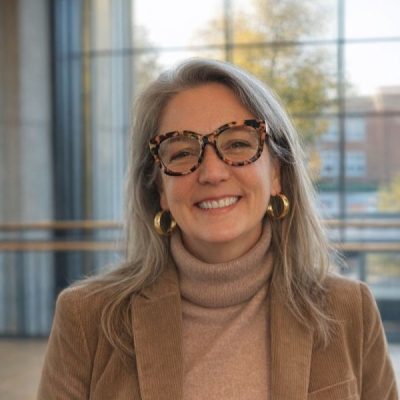
Dr. Carol Ann Gross‑Davis is a nationally recognized Environmental Scientist and Epidemiologist with more than 30 years of experience in environmental health, regulatory science, and public health research. She is widely regarded for her expertise in cumulative risk assessment, exposure science, environmental justice, epidemiologic methods, and the interpretation of complex population health data.
Prior to joining the Philadelphia Department of Public Health as Chief Epidemiologist, Dr. Gross‑Davis served in multiple scientific and leadership roles at U.S. EPA Region 3. Her work spanned the Office of the Regional Administrator, the Office of Communities, Tribes and Environmental Assessment, the Office of Air and Radiation, and the Office of Research and Development. She contributed to national initiatives focused on air quality monitoring, chemical exposure assessment, cumulative impacts, and health disparities, and has a long record of translating scientific evidence into actionable policy and regulatory guidance.
Dr. Gross‑Davis holds academic appointments as an Adjunct Assistant Professor at Jefferson University and an Affiliate Professor at Drexel University. She teaches courses in environmental health, epidemiology, and public health methods, and has spent more than two decades mentoring graduate students and early‑career professionals in research design, data interpretation, and risk communication.
Her published work includes studies on chemical and non‑chemical stressors, wildfire smoke exposure, cancer cluster investigations, air quality monitoring approaches, and environmental determinants of chronic disease. She is often sought as an expert for cumulative impact evaluations, regulatory compliance assessments, and community-centered public health investigations.
Throughout her career, Dr. Gross‑Davis has been committed to bridging science, policy, and community needs. Her leadership at PDPH strengthens the city’s epidemiologic capacity, supports data-driven decision-making, and advances health equity for Philadelphia residents.